By Laura Smith
What Is Curiosity? How Do We Question? What Are We Doing Here? What Do We Want to Know? The award-winning Canadian writer Alberto Manguel explores these, and thirteen other equally poignant questions in his book Curiosity, published by Yale University Press (2015). A personal, historical, poetic, and imaginative journey, Manguel’s book invites readers to contemplate some of the questions that—since time immemorial—have driven human beings to display both their best and worst attributes.

Born in Buenos Aires, Manguel grew up in Tel-Aviv, and has since mostly resided in Europe and Canada. The experience of living in multiple countries as the son of a diplomat has inevitably influenced Manguel’s complex sense of identity and culture, his experience as a writer and, foremost, as a reader. For Manguel, the reader pierces through the constraints of a constructed linear experience of time and space and as such forms part of a collective imaginative fabric. Manguel explains that “the intimate conviction of readers is that there are no individually written books: there is only one text, infinite and fragmented, through which we leaf with no concern for continuity or anachronism or bureaucratic property claims” (277). The weaving of history, fiction, and personal memory reveals Manguel’s understanding of thought as a complex temporal and spatial shared geography. “Cartography,” writes Manguel, “is an art of mutual creation” (166). The participation of readers and writers in such a fabric testifies to the individual and shared life of human curiosity—Manguel’s questions are always posed in the first-person plural.
Each thematic chapter begins with a short personal reflection by Manguel. These are the author’s impressed memory-images: finding home in his imagination rather than his ever-changing address; the recognition of a special teacher igniting the spark of his intellectual curiosity; the obligation of sincerity to himself in the presence of his beloved dog; and the appreciation of his own inevitable death as the accelerated end to the story of his life. Against these brief peaks into our guide’s experience, our own sense of a dynamic time inevitably rises to the fore. We are transported to our hybrid real-and-imagined memories or dreams; those, for example, which are intimately intertwined with the pages of our favourite childhood books.
Guiding us in the exploration of these questions, Manguel incites the aid of another traveler: Dante in his, The Divine Comedy. Weaving an intricate narrative of juxtaposed historical, contemporary, personal, and universal, imaginative experience, Manguel’s philosophical questions are mirrored and explored through the adventures of Dante’s epic fourteenth-century poem. Like Manguel, who follows the poet on his quest through the three realms of Hell, Purgatory, and Heaven, we too follow the author of Curiosity into a forest of his making; exploring, in his footsteps, the paradoxes of human existence. In times of hardship, when words fail her, the writer Jeanette Winterson has remarked that she looks to the poets who have “deep-dived [the words] for [her] and brought them back to the surface.”[1] This allusion, perhaps to Hannah Arendt’s description of Walter Benjamin as a ‘pearl diver,’ rings true for the collected insights that Manguel’s book so generously offers.
Like Dante’s poem, there turn out to be few clear answers in Curiosity—this is fine and even must be so. “Nothing in the Commedia is only one thing,” writes Manguel (217). Rather, Curiosity is the journey of engaging the plurality of what drives our human quests, our modes of expression, and our troubled communication. For Manguel, human beings are born storytellers: “we imagine in order to exist,” he states (3). The inevitability of the failure to ‘answer’ fully to our curiosity, however, safeguards against extinguishing what Walter Benjamin described as the ‘living flame’ of a work of literature. Manguel explains:
There is an essential problem with which every writer (and every reader) is faced when engaging with a text. […] Our ability to grasp the text in all its multilayered complexity falls short of our desires and expectations, and we are compelled to return to the text once again in the hope that this time, perhaps, we will achieve our purpose. Fortunately for literature, fortunately for us, we never do. Generations of readers cannot exhaust these books, and the very failure of language to communicate fully lends them a limitless richness that we fathom only to the extent of our individual capabilities (7).
Manguel’s Curiosity is a reflection on difficult questions of a moral, ethical, and philosophical nature. Like all great guides, Manguel offers his readers the tools required to venture forth on a journey of their own making.
EVENT:
Alberto Manguel will be the keynote speaker at the Feestelijke Opening Kunstenbibliotheek, September 30, 2017, in Ghent.
KASK en Conservatorium / School of Arts Gent i.s.m. S.M.A.K., Design museum Gent, HISK, STAM en de Gentse Gidsen. Location: Campus Bijloke, Louis Pasteurlaan 2, 9000 Gent (gratis).
http://schoolofartsgent.be/nl/agenda-nieuws/agenda/feestelijke-opening-kunstenbibliotheek?eCat=7
External links:
The CBC’s host of Ideas Paul Kennedy interviews Alberto Manguel about his book Curiosity:
http://www.cbc.ca/radio/ideas/alberto-manguel-s-curiosity-1.3016846
You can find a selection of Manguel’s essays on his personal website as well as a list of recommended readings – his 100 favourite books.
[1] Jeanette Winterson, talk from the 2010 Edinburgh Book Festival. https://www.brainpickings.org/2017/06/01/jeanette-winterson-edinburgh-book-festival-art/





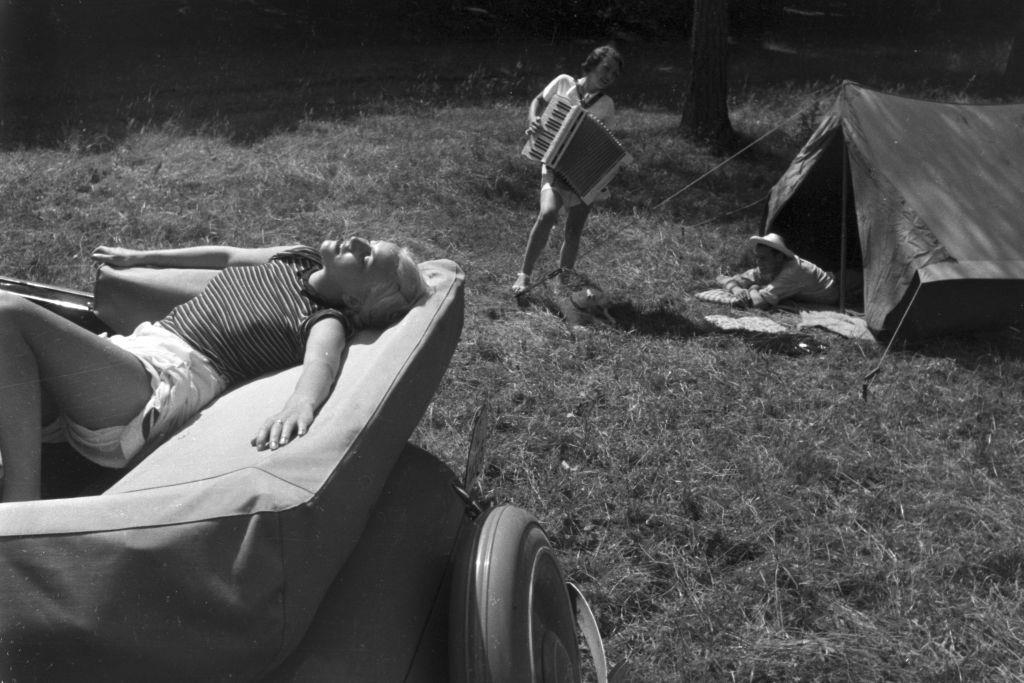
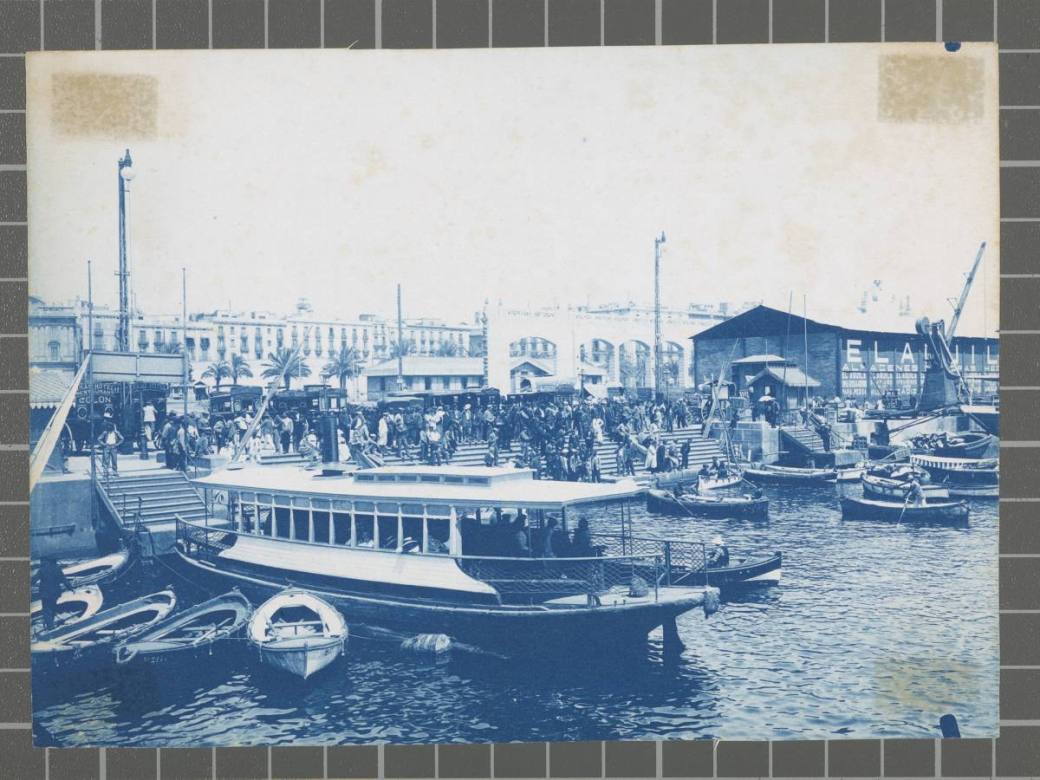
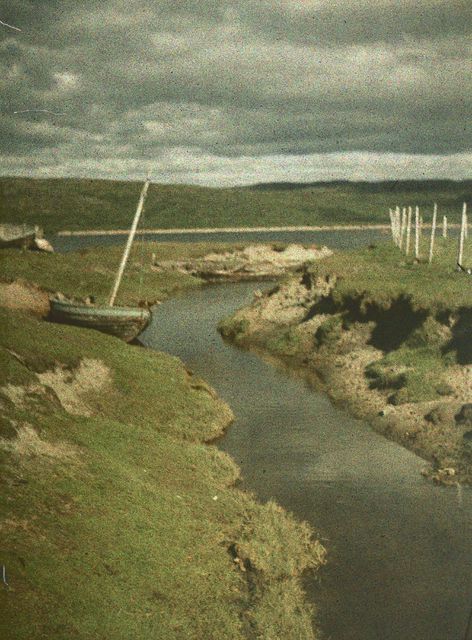
 Jean-Christophe Menu is one of the major voices of alternative comics in France, both as an author and as the co-founder of L’Association, the leading publisher of French comix in the period of his 20 years editorship (he resigned a couple of years ago). He is above all a living paradox: the angry young man of the French bande dessinée scene, he is also the holder of a PhD on the subject (moreover an excellent one, frequently used and quoted in academic research: La Bande dessinée et son double, 2011); the living example of authentic visual thinking, he is also an author who does not make any real distinction between his drawings and his writings. His new book is the perfect yet open synthesis of all these forces and tendencies.
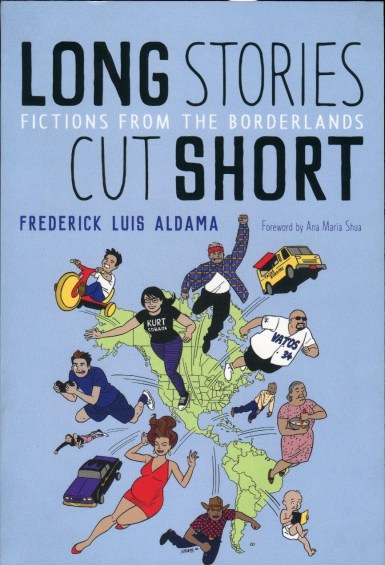 without any concession to the naïve and sentimental utopias that continue to litter our perception of the harsh reality. Aldama’s prose is in your face and Long Stories Cut Short is amongst the most depressing books one can imagine. A welcome reply to all romantic views on the land of milk and honey (“She might be able to go home, the doctor announces. /He can only think: Hurry up and die.”, p. 171).
 Erin Manning and Brian Massumi will discuss their development of ‘The 3 Ecologies Institute’ at SenseLab (
 In recent years, widespread media and critical attention has been lavished on famous architects and how their spectacular designs contribute to the branding of cities. Far less is known about the decision-making processes behind these projects and their subsequent urban effects. The book Starchitecture (by urban scholar Davide Ponzini and photographer Michele Nastasi) investigates recent skyscrapers, cultural projects, and high-profile developments designed by star architects in cities such as Paris, New York, Abu Dhabi, and Bilbao. The book addresses key questions: How and why do spectacular works get commissioned and procured? What are their visible urban effects? What can urban planners, architects, and policy makers learn in order to engage in more successful citymaking? In his presentation Davide Ponzini will explain and critique a growing global condition by revealing how starchitecture has been and continues to be deployed in cities around the world. These arguments are vital to understanding the urban landscapes of today, and tomorrow.
 Cultural Studies Leuven