Moving Together – Book Release

By Jonas Rutgeerts

51dgEA9UbKLOn Friday, October 23 one of Belgian’s leading sociologists and dance critics Rudi Laermans presents his new book Moving Together: Theorizing and Making Contemporary Dance in the Kaaitheater (Brussels). In this book Laermans analyzes contemporary dance through a combination of dance studies and sociology. The book consists of two parts. In the first part Laermans retraces his personal history as a dance theorist through a detailed analysis of different seminal dance works. In the second part he researches the “multi-faceted dynamics of co-creating dance”. Based on personal observations and in-depth interviews with dance artists linked to the Brussels dance scene, Laermans manages to analyze both individual dance works and the social contexts that precede or envelope these dance performances, thus bridging the gap between aesthetics-centred and context-centred tendencies in the study of contemporary dance. Building on years of expertise in both the field of dance-studies and sociology, he is one of the few theoreticians that manages to adopt this symmetrical approach that examines dance both as an aesthetic and social practice.

For the occasion of the presentation of the book, Laermans will enter into discussion with Brussels-based American performance artist and choreographer Eleonor Bauer.

‘Clearly written, meticulously researched and theoretically enriching, Rudi Laermans’ first-hand accounts of key performances by some of the most influential names that have defined contemporary choreography since the mid-1980s make us see how crucial the Flemish dance scene has been for the development of contemporary experimental dance — and therefore, how it has also been a strong influence in those discourses that inform the reception and perception of international dance today. Absolutely essential.’ 

André Lepecki, Associate Professor in Performance Studies, New York University 

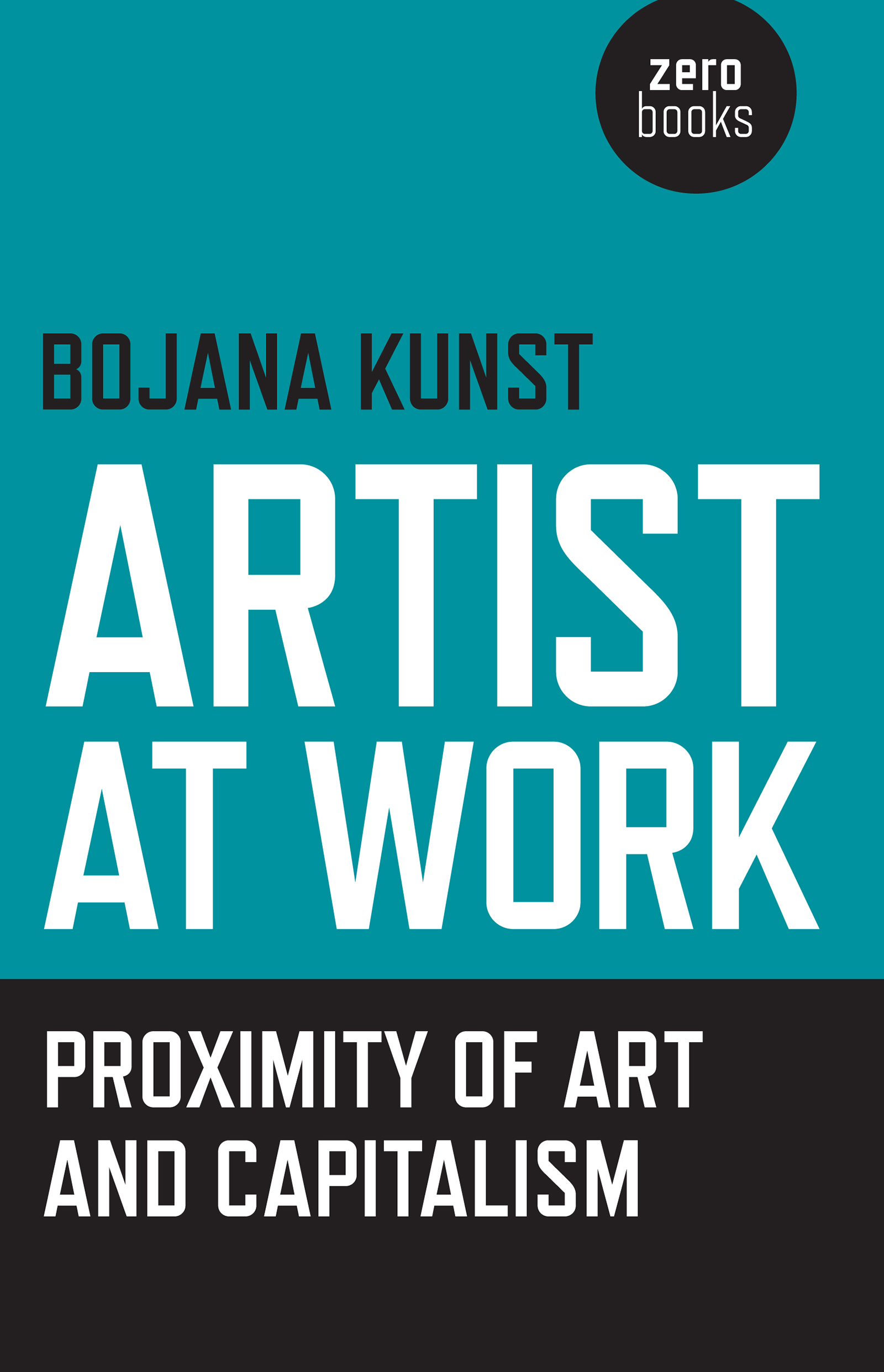
Bojana Kunst’s ‘Artist At Work: Proximity of Art and Capitalism’

By Jonas Rutgeerts

bojana-kunst-artist-at-workBook presentation of Bojana Kunst’s ‘Artist At Work: Proximity of Art and Capitalism’. 1/10 in De Vooruit, Gent.

When Belgian philosopher Dieter Lesage was invited to write an introductory text for the catalogue of German artist Ina Wudtke Lesage slightly changed the proposal. Rather than describing Wudtke’s artistic “products”, his “Portrait of the Artist as a Worker” describes what the artist does when she works:

“You are an artist and that means: you don’t do it for the money. That is what some people think. It is a great excuse not to pay you for all the things you do. So what happens is that you, as an artist, put money into projects that others will show in their museum, in their Kunsthalle, in their exhibition space, in their gallery. So you are an investor. You give loans nobody will repay you. You take financial risks. You speculate on yourself as an artistic asset. You are a trader. You cannot put all your money into one kind of artistic stock. So you diversify your activities. You manage the risks you take. You would say it differently. I know. You say you suffer from a gentle schizophrenia. You have multiple personalities. You are a photographer, but also a DJ. You have a magazine, you are a publisher, but you also organize parties. You take photos of party people. You throw a party when you present a magazine, you make magazines with photographs of party people, you throw a party and you are the DJ. You do interviews with people you meet, you do interviews with people you would like to meet, you tell the people you meet about your magazine. You buy records on flea markets, you distribute flyers announcing parties in the bar where you have a coffee after visiting the flea market, you make videos recording how you destroy the records you bought on the flea market, you liberate your country from its bad music, you show the video in a gallery and you are a DJ at the vernissage.”

In her new book Artist at work art historian and Bojana Kunst takes up exactly this question of “how do artists work?”. What should we consider as artistic work? Is everything the artist does part of the artistic ‘practice’? Where is the work? Is it in the gallery? In the theatre? In the rehearsal space?…

In her thought-provoking book Kunst addresses all these questions through a more extensive analysis of contemporary “postfordist” or “immaterial” labour. Mapping the evolution in the organisation of labour, Kunst shows how the modernist claim that ‘the work of art and the work of life should be inseparable’ has established itself in the very hearth of capitalist society. However, rather than becoming cynical or pessimistic Kunst searches for way to reclaim ‘work’ and to emancipate artistic work from its neoliberal counterpart.

In this time where every ‘creative worker’ is juggling several projects and manages several “projective temporalities”, Kunst analysis of the way artist works provides an insightful analyses on how artist work and looks for pathways to “rebel against the project and demand the temporality of work as duration”.

Blogging the Narrative of Culture, Media and the Arts

By Anneleen Masschelein

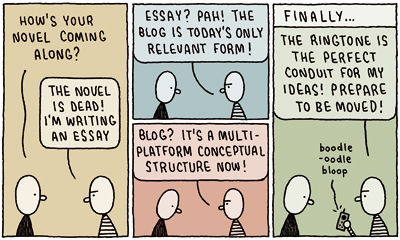
Tom Gauld

Image courtesy of Tom Gauld.

The blog “Cultural Studies Leuven, Blogging Since 1425”, hosted by the staff of the Institute for Cultural Studies in Leuven, aims to share interesting publications and events, and give insight into our research and the best work of our students. The research of ICS Leuven can be placed on three, interrelated axes: ‘cultural theory and concepts’, ‘applied narrative’ and ‘media, art and technology’. Interdisciplinarity is of course crucial to the concept of Cultural Studies and we enjoy collaborating with colleagues from other disciplines, departments and institutions. However, these three strands, we believe, do summarize our shared project and can help make our identity as a group visible. Last but certainly not least, these three thematic focus points are not purely research-oriented but they all have practical ramifications in various events that will be organized in the coming year.

Cultural theory and concepts encompasses research on important cultural theorists and ideas that belong to the canon of cultural studies, ranging from the theorists associated with the Birmingham Centre of Contemporary Culture Studies, like Stuart Hall or Angela McRobbie, to important thinkers about culture now (Meghan Morris, Andrew Ross, Lauren Berlant, Pierre Bourdieu and Gisèle Sapiro, …) and in the past (Walter Benjamin, Jean Baudrillard, Theodor Adorno …). We also focus on certain concepts that are topical in cultural studies today: precarity, postfeminism, vernacular, identity, creative industries, amateur/professional, immunity, biopolitics and social choreography… Apart from traditional research, it is our aim to invite some of these theorists to Leuven and interview them for our blog. We will signal interesting events and there will be screenings of documentaries (or other public performances like plays or blogs…) related to theorists, theories and concepts.

Applied Narrative concerns all kinds of storytelling that are a bit outside or beside the focus of traditional narratology, i.e., the analysis of literature and film. More particularly, we study serial storytelling in quality television series, the culture of handbooks or How-To-Books for various literary genres, graphic novels and photonovels and photo narratives, illness narratives, and storytelling and new media. But also the question of dance and notation, archives and narrative and semiotic structures in culture can be seen as part of this focus. We not only study all these types of narrative, but we are also actively involved with different organizations that host events on new forms of storytelling – the Are You Series festival at Bozar or Passa Porta, a Brussels-based literary organization – and many of us enjoy working and experimenting with new narrative forms.

Media, Art and Performance is a label that groups together all work on the intersection between art, culture and technology on the one hand: the representation and social construction of technology, but also new cultural and artistic forms that stretch the limits of technologies. On the other hand, it also has to do with our mediatized society in which the distinctions between real and fiction, between authentic and fake, between live and staged have become highly complex and often problematic. This is perhaps most clear in the domain of performance in the broadest sense of the term – ranging from “art” to performing and staging the self and biopolitics – that holds up a mirror to society and ourselves and shows how the human body is always already mediatized and permeated by technology and by politics. Many of the concrete projects that staff members are involved with can be placed under this aegis. There are the collaborations of ICS with FabLab Leuven: Ex Vitro, an artist in residence program that will result in an artistic walk in the “science quarter” of Leuven, a Hackathon where hackers will remix photographic heritage, and a city quest using augmented reality that we elaborate with the city archives of Leuven. The new course on the theory and analysis of contemporary dance in collaboration with STUK will bring together various choreographers and dramaturgs in public debates. And there are several events coming up, such as an exhibition on interwar typography around the “Arts et métiers graphiques” magazine in October (University Library Leuven, opening Oct. 21st),  and a conference on ‘Photography Performing Humor’ in November (LUCA School of Arts Brussels, November 24th-25th).

As pointed out above, the three focus points intersect in interesting ways. Moreover, we are all cultural and intellectual omnivores who are basically interested in everything. So while we will try to consistently highlight our three research tracks in the blogposts, we also keep an eye open for everything interesting, especially when it comes from our students, who, in the course of their time with us, constantly feed us with new impulses and ideas.

Paul Otlet’s Mundaneum, or How to create the internet before the digital age

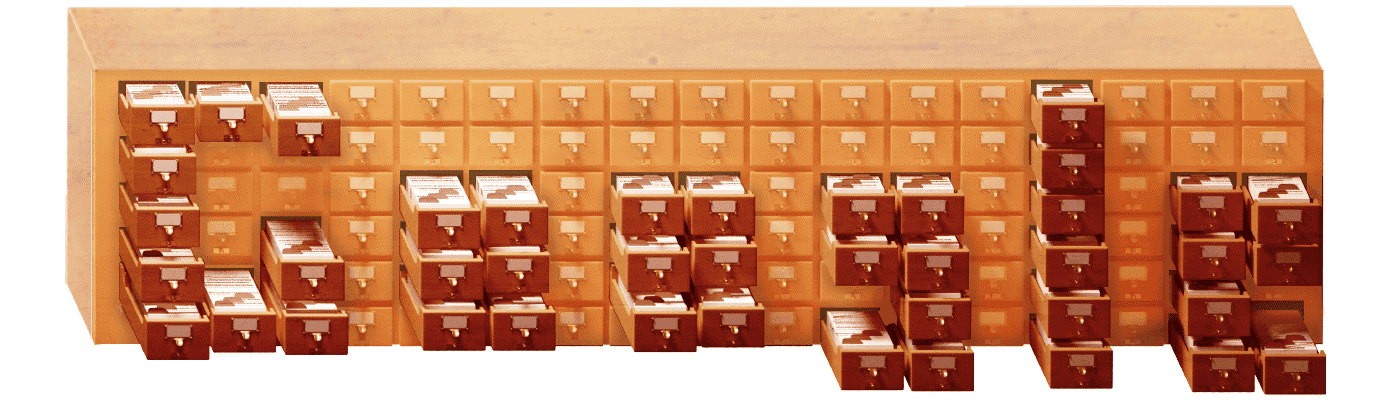
Otlet's post

By Jan Baetens

On August 23rd, Google celebrated the 147th birthday of Paul Otlet, one of the visionary minds whose thinking has proven crucial in the birth of the Internet. Otlet did not invent the Internet himself. Inventions are always the result of a social and collective “desire” – and I am reusing here the key word of the seminal book by Geoffrey Batchen, Burning With Desire (MIT, 1997), on the dream of photography before the technique was actually developed and eventually commercialized (or given away for free: nothing new under the sun).

Otlet’s dream to  foster world peace and understanding between nations through information and communication could only take a pre-digital form when he established his Mundaneum, a searchable index cards system on which he worked during the first decades of the 20th Century (in this context, he also introduced many important technical innovations in the field of information storage and retrieval, for instance in the UDC system or, more prosaically, the ideal size and form of the index card and library furniture).

As demonstrated by Markus Krajewski in his World Projects (Minnesota UP, 2014), the craving for global information systems was already a major feature of Western culture around 1900, and Otlet was just one of the many revolutionary thinkers eager to supersede the divide of languages, media, currencies, disciplines, and national frontiers. Institutionally speaking, most of these thinkers were not very successful. They worked in the margins of the established knowledge production centers, often with little political and ideological support from the decision-makers.

If the case of Paul Otlet is so fascinating, it is not only because of his truly visionary thinking, but also because of the possibility we have now to rediscover his intellectual and material heritage in all its complexity. The City of Mons, European Capital of Culture in 2015, hosts the essential pieces of what is left of the Mundaneum –the heart of the “ideal city” of culture, research and information Otlet wanted to build from scratch with the help of Le Corbusier. It is hosted by a wonderful museum that combines an impressive reconstruction of Otlet’s working space with thematic organizations on knowledge and media communication. And Paul Otlet’s major scientific publication, his Treatise on Documentation, has just been republished in a well-designed facsimile edition. It is an amazing document, not only for those working on the history of science, as well as an excellent preparation for a city trip to Mons (don’t miss Mons 2015, you will regret it!).


Mundaneum: http://www.mundaneum.org/en

Paul Otlet, Le livre sur le livre. Traité de documentation (with prefaces by Benoît Peeters, Sylvie Fayet-Scribe and Alex Wright). Brussels : Les Impressions Nouvelles, 2015. (http://www.lesimpressionsnouvelles.com/catalogue/le-livre-sur-le-livre/)

Intellectual Property Rights: good or bad for Creativity in the Digital World?

By Fred Truyen

VanEyck2

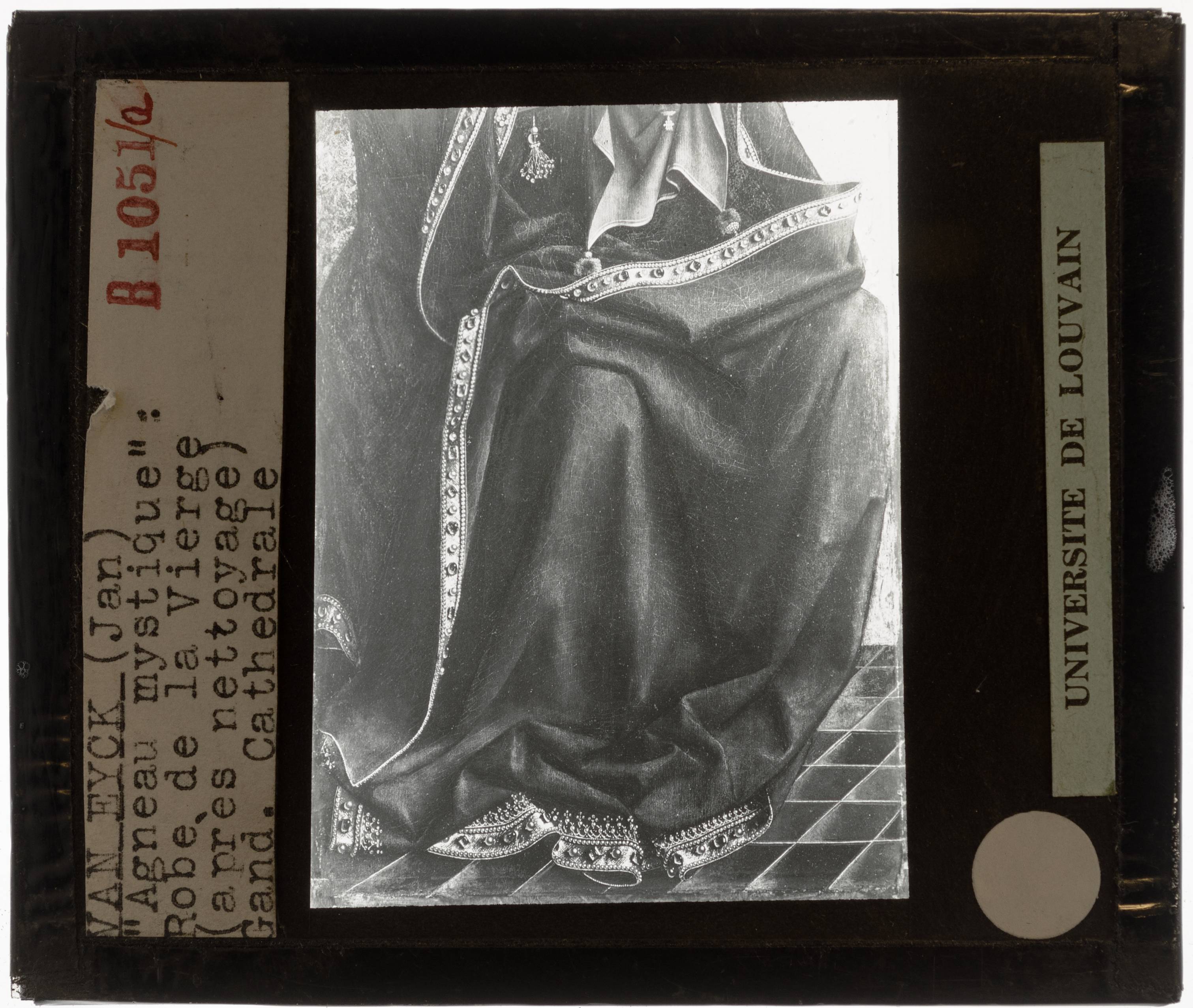
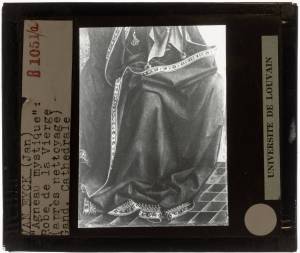
Jan van Eyck. Hubert van Eyck. Lam Gods Open: Our Lady Mary, detail: Dress Collection Glass slides KU Leuven Saint Baafs Cathedral, Ghent Public Domain Marked

I was writing a contribution for a book for the RICHES project, which deals with challenges of heritage in the digital environment. I chose to offer some reflections on our experience with Intellectual Property Rights (IPR) in the EuropeanaPhotography project (see also the nice final report!). While this project was about early photography, and we spent golden moments just sifting through brilliant collections of early photographs, (we never had a meeting without actually looking at photos) – IPR imposed itself as an unwanted burden; a horribly complex but unavoidable issue when you’re dealing with photography. From a task attributed to a subcontractor it quickly became a pivotal aspect of the project. And an interesting one, I must confess.

What was the situation? We were, with about 15 partners, of which several hold prominent archives of photographic heritage, both public and private, hired to digitize, and then contribute about 450.000 high quality images of early photography to Europeana. The digitization, though technically challenging, went smoothly. But the upload to Europeana encountered a glitch, when it appeared that the images had to pass through what is called the “Rights Labelling Campaign“, which tries to identify, for each object uploaded to Europeana, the copyright status.

For an individual user of Europeana, this is not so relevant, but once you want to make professional and/or commercial use of what is on Europeana, it becomes totally different. Because while Europeana gives you free access to about 30 million objects of European Cultural Heritage, copyrights tend to block any re-use other than personal re-use. So even a teacher who would want to make a website for their students cannot simply copy these images, without checking the copyright. Having clear copyright labels that allow you to search for reusable content is thus a necessity, both for humans and computer applications: developers can easily filter out content that they can reuse in their apps.

At first the content providers for EuropeanaPhotography were not pleased by this initiative, to say the least. Private photo agencies, whose business model is completely IPR oriented, fearing their older work, when labelled Public Domain, would be reused without them receiving any revenue. Similarly, public archives, who feared misuse of heritage photos (e.g. as backgrounds in video games or commercials), were not at ease. You can read about these findings in our IPR Guidebook.

Eventually, we had some very good experiences with publishing under an open license, e.g. with the beautiful Lithuanian Art Museum collection (see also a nice blogpost about this), the Gencat collection and the KU Leuven collection.

On the one hand, certainly in the digital realm, IPR is essential so that those who produce and create valuable works can earn a living from it. Without copyright protection (and the similar patent, design, software and database protections) authors, programmers, developers, publishers and others in the creative industries wouldn’t be able to sustain their work. But with massive sharing of information on the internet in the smartphone age, IPR doesn’t seem very much up to the task. And it’s very complicated too. If you want to learn more about its intricacies, there are the absolutely excellent and very readable guidelines developed by the Europeana Fashion project. In particular, two deficiencies in the current regulations are holding up creative reuse.

First of all, most European national legislations do not have a real “Fair Use” provision such as US Copyright Law §107. These limit the copyrights in such a way that educatonal reuse is warranted. Instead, in Europe, there are “fair dealings” with the rights holder representatives (often collecting societies) that many in the educational world would rather label as “unfair dealings“. In Belgium, e.g. through Reprobel, universities and libraries contribute for their use of copyrighted work in an educational context.

Second, libraries and archives are hampered when trying to put digitzed heritage online by still unfinished legal work on Orphan Works, a work of which the author is unknown, which is the case for many very interesting family photographs in archives (which are often the most appealing images for an archive to publish). In many European countries there is still no translation of the EC Orphan Works directive in national laws, so there is still a lot of risk involved that right holder representatives come up with claims.

Public Domain Mark

What can help, and how can you help? Well, first of all, if you contribute stuff to the web and do want to share, use Creative Commons rights statements to clearly indicate that your work can be reused, remixed, redistributed to the benefit of all, and why not to your own benefit in the long run. And don’t be too shy: “commercial reuse” isn’t always “commercial” as in “commercials” or advertising. It could be some smart kid makes a nifty application with your work, which brings joy to all! He/She needs to pay his bills for pizza and sweets, and their internet connection too!

But, more generally, copyrights should be embedded in a broader discussion, involving moral and cultural rights. One of those rights is the right to culture! A very convincing proposal has been worked out in the RICHES project policy brief, a must read for anyone interested in Cultural Policy and Creative Industries. Real access to culture means also appropriation by stakeholder communities and the possibility for co-creation.

And what if you yourself, in a sudden moment of creative fervor, decide to reuse content and make something new and share it with others? Well, you can easily search for reusable content online using the following resources:

Enjoy!