The Belgian Photobook

By Jan Baetens

Curated by Tamara Berghmans and still on display till Oct. 6th, the FOMU (Antwerp Photography Museum) exhibit on the Belgian photobook is an absolute must see. As a specific photographic host medium, the photobook is definitely not new. Actually, the first pictures by Fox Talbot were published in this format and the rapid shift from unique and non-reproducible daguerreographs to positive-negative types of photography capable of being reproduced and hence (more) easily reprinted in book format, represented a kind of silent revolution, the consequences of which have not always been taken seriously. In recent years, the famous trilogy by Martin Parr and Gerry Badger on the photobook as an independent branch of photography culture has dramatically changed this perception and helped challenge the false idea that photographs are only real or serious cultural artefacts when they are seen on the walls of a museum or gallery.

The Anglo-Saxon approach of Parr and Badger does, however, come with a price in terms of corpus (including genres) as well as temporal, geographic and cultural limitations. Volumes 2 and 3 of their trilogy already addressed these issues, but many questions are still open. What about “minor” cultures in a photography field that is so heavily dominated by the Paris-New York axis? What about genres that are underrepresented or ignored in “major” contexts? What about the very idea of word and image relationships when photography becomes a practice that is aimed to circulate in book format?

Photobook

The FOMU exhibit offers many new answers to questions like these, and it does so in a way that is both highly attractive for a large audience and very rewarding for the more scholarly interested public. The museum showcases a large variety of often fascinating and always very surprising objects, which can not only be seen or admired, but also actually read, either in analog form (many books are on display and can be freely accessed) or in digital form (with the help of tablets and touch screens, all of them using high quality scans). Text panels and captions are exemplary, that is sober and well written, and guide the visitor to the exceptionally well-made (and relatively inexpensive) scientific catalog, which combines detailed descriptions of all items on display and in-depth analyses of thematically structured transversal issues.

In addition, this exhibit is a great opportunity to further reflect on the meaning of the word “Belgium”. The Belgian photobook is radically multilingual, while the differences between Flemish and Francophone cultures are much smaller than one might expect, and it is open to artists, curators, critics, and writers coming from all over the world. In that sense as well, this exhibit is a necessary complement to larger debates on culture and identity in Europe.

Info: https://www.fotomuseum.be/en/exhibitions/Photobook_Belge.html

Symposium “Transforming Relations: Dance and Difference”

SYMPOSIUM : TRANSFORMING RELATIONS: DANCE AND DIFFERENCE
Friday 26 April. 14:00 – 18:00. Free (without reservation).


Speakers: Antonia Baehr, Clare Croft and Amelia Jones

In the first decades of the 21st century, many traditional stereotypes surrounding gender and sexuality have continued to be scrutinized. The LGBTQA movement, queer theory and #metoo, for instance, have encouraged a growing awareness of those identities and experiences that are marginalized by dominant ways of categorization. Likewise, various genders and sexualities have been gaining visibility in popular culture, as well as in the political arena. The challenge persists, however, to negotiate between the development of categories and structures, and the relational conditions through which notions of difference are continuously reconfigured.

Dance has been particularly responsive to such issues of difference. Fostering an art that thinks through bodies, movement and relation, dance and choreography support an exploration and rethinking of questions of corporeality, sexuality and gender. They carry the potential to frame difference not as a divergence from what is already established in advance, but rather to queer difference as a creative openness that continuously produces new ways of relating.

On April 26th, 2019, the Centre for Cultural Studies (KU Leuven) and STUK – House for Dance, Image & Sound are hosting their fourth annual symposium on choreographic issues, Transforming Relations: Dance and Difference. The event brings together speakers from dance studies and related theoretical fields, as well as practitioners, to reflect on how relations are transformed and how relations transform within the field of dance.   – more info

SCHEDULE
14.00 – 14.15 Welcome and introduction 
14.15 – 15.00 Amelia Jones 
15.00 – 15.45 Antonia Baehr
15.45 – 16.30 Clare Croft
16.30 – 17.00 Coffee break
17.00 – 18.00 Round table

COM-DANS-foto-Symposium-©Joeri-Thiry-STUK-Huis-voor-Dans-Beeld-Geluid-20

Beyond & MuPop – The new heritage experience

By Fred Truyen

b1From February 28th until the 14th of March, the exhibition “Beyond”, produced by 7 students of the MA in Cultural Studies[i] featured at the Agora Learning Centre in Leuven. The opening was attended by Yiannis Mouzalas, the former Greek Minister for Migration.

The exhibition “Beyond” explores why people choose to migrate and how they experience their journey. By zooming in on the story of twelve individuals, the students tried to give an image on migration nowadays in a first part of the exhibition. Their stories vary from fleeing from war zones to moving for love and are brought back alive through an object unbreakably linked to their path towards Belgium. It also contains video footage of interviewees telling their stories.


These images of migration stories today are juxtaposed to heritage photos from Europeana collections. A selection was made from the exhibition “Thousands are Sailing[ii] by Sofie Taes, Research Assistant at Cultural Studies in Leuven, who is the main curator of the Europeana Photography and Migration collections. b4This original exhibition, created in collaboration with Photoconsortium, was shown in Pisa in October of 2018 and already traveled to Leuven for the Day of Science at the University in late November 2018.
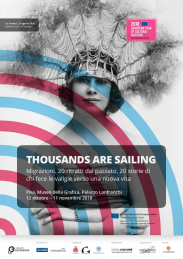
“Thousands are Sailing” reprints vintage photographs from major archives and major collections in Europe, and tries to capture stories of migration through the centuries of classic photography. The exhibition was part of an EC funded project “Migration in the Arts and Sciences” produced by a consortium led by Europeana Foundation in which KU Leuven was in charge of selection and curation. The physical exhibition complements the virtual exhibition on the Europeana site “People on the Move”.

b6

Instead of telling a synthetic, historic narrative, an aesthetic, observational stance is taken in which images are telling their own story, which are then contextualized. It starts with looking at the image, like Beyond starts with listening to stories. It is more memory and recollection than history, as our main aim at Europeana is to deliver and open up the archival, museum and library material in a way that (art) historians can start to work with it from a bird’s eye perspective on Europeana’s massive collections. But it cannot be limited to just showcasing heritage. The goal is to engage audiences and communities in contributing to and taking ownership of their heritage, to make it a living memory that intertwines with today and helps shape visions for the future.
b7

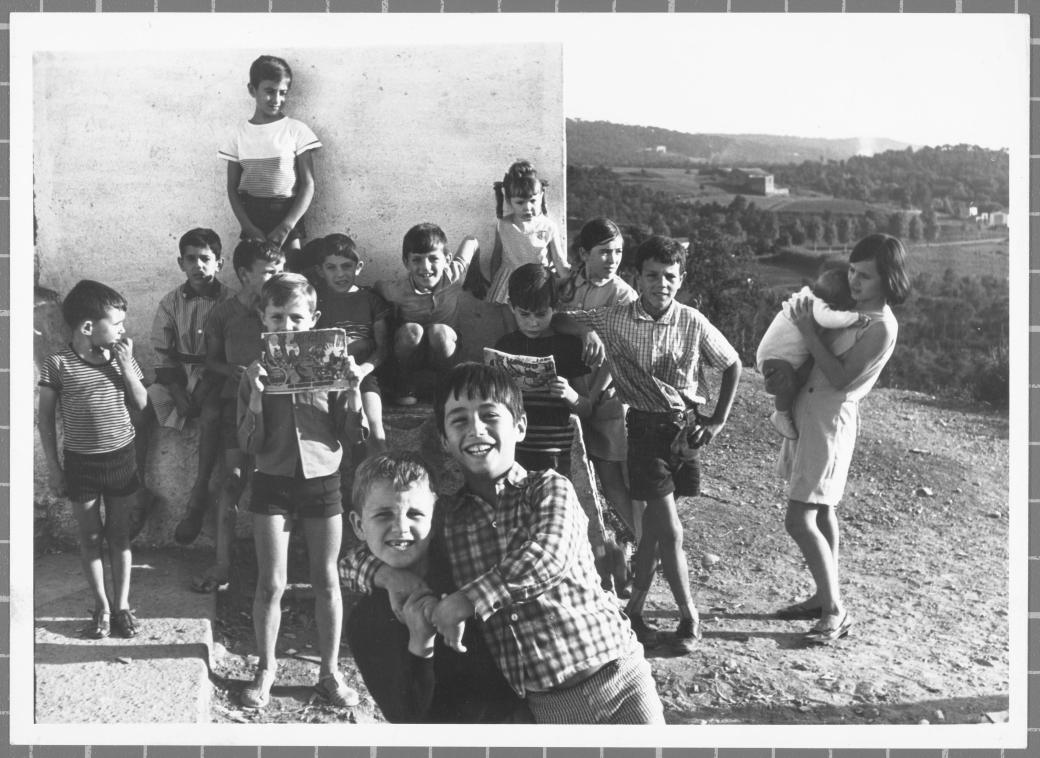
Children in the suburbs of Girona, 1960. Ajuntament de Girona/CRDI CC-BY-NC-ND

Citizen contributions

For this Europeana developed the idea of “Europeana Collection Days”, where citizens are invited to contribute their stories by means of an object of memory, which is then digitized and published together with the testimony in the Europeana collections. This way, memories of the past are linked to today’s experiences and become a shared heritage. Collection days for the topic of Migration were held in more than 10 European cities including Athens, Belgrade, Brussels, Budapest, Cardiff, Dublin, Pisa, Sibiu, Utrecht, Zagreb and others.

Inclusion

A next step is envisioned in the project “WeAre#EuropeForCulture” which Cultural Studies will run in 2019 together with Photoconsortium, a non-profit organisation for the protection and promotion of photographic heritage, and Noterik, a media development company. In 10 European cities a workshop will be run with a selected group of people who normally do not have a specific interest or access to cultural heritage, in an effort to further inclusion. They will be invited to engage with their own stories with selected collections, and help with the curation of lead stories and interactions. These will be put to use on large interactive TV screens in accessible spaces where the general public will be able to interact with the contents using their smartphone.


In each city an opening event will take place with the co-created content. A final event at the House of European History in Brussels will wrap it all up, attended by representatives from the different workshops. The project takes the idea of the Collection Days one step further by adding playful interactions: the audience will be able to control the content display and engage in quizzes, votes and gaming activities. This way, not only the content of the exhibitions will be the result of crowdsourcing, but also the activities will leave the safe confinement of the heritage institutions and meet the audience in public spaces.

This corresponds to an evolution in which our vision and expectations towards the mission of Cultural Heritage institutions is profoundly changing through online technologies. One of the leading thinkers in this field, Pier Luigi Sacco, speaks about a move from an approach of cultural heritage which can be called “patronage”, involving curation by professionals, over a “culture 2.0” phase involving scaling up and a market approach towards the development into “open communities of practice” in what can be called Culture 3.0[iii].  Whatever the names we give to these shifts, the reality of shifting city populations in European Cities both through generational change as well as influx and migration means that Cultural Heritage institutions face the challenge of reaching out to new audiences, outside of their comfort zone.


[i] Alja Kiseleva, Esther Plasschaert, Malou Vandevorst, Maria Panagiotou, Natai Herremans, Nikita Artamov and Stella Cheng

[ii] See previous blog https://culturalstudiesleuven.net/2018/10/15/exhibition-thousands-are-sailing/

[iii] P.L. Sacco, Culture 3.0: A new perspective for the EU 2014-2020 structural funds programming, EENC Paper, April 2011, https://www.interarts.net/descargas/interarts2577.pdf

“The serial self”: the Influence of Autobiography on contemporary television and internet series

BOZAR, December 14th 2018, 11:00

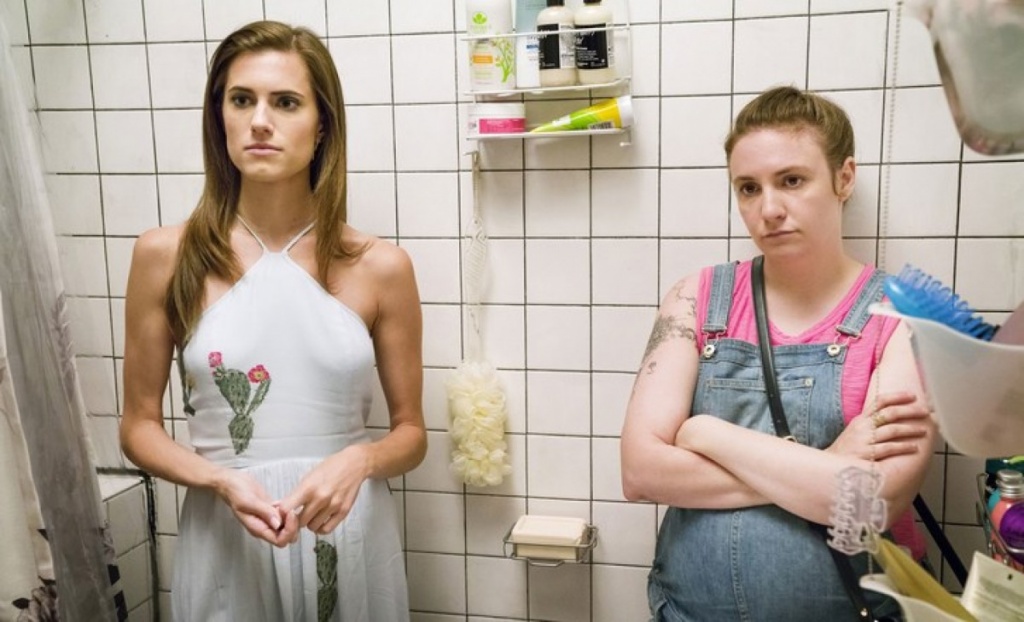
Today we witness a sharp rise in autobiographical series, probably with Girls as the most popular example. Writer Lena Dunham, who plays the main character Hannah Horvath, has often been confused with her creation. Actor, stand-up comedian and screenwriter Louis C.K. also wrote several series – Lucky Louie (2006) and Louie (2010) – around a character that resembled him very strongly. In the Australian series Please Like Me, screenwriter Josh Thomas plays the main character Josh. Closer to home, Leander Verdievel made a beautiful series, Gevoel voor Tumor (Sense of Tumour), about his battle with cancer. And what about the reality formats that focus on specific personalities, like the tragic TV chef Anthony Bourdain? In the world of YouTube, finally, it is the personality of the YouTuber or vlogger that carries the series.

Nothing seems easier than writing about yourself, but autobiographical writing entails a lot of choices. How close does one stay to reality, or can fiction and reality be mixed? How far can one go in playing with reality and fiction? How can the audience relate to a character that originates in a very personal experience? What are the consequences for a maker (and his or her environment) who is identified with a character and a series? Can you control what happens with your person in the public arena? Since the second half of the twentieth century we see in all domains of storytelling a huge increase of autobiographical narratives. This has even been called a ‘memoir boom’, that today is still ongoing. In television, reality formats remain popular, but also in quality TV series autobiographical stories have become more important. The medium raises interesting new questions: can an autobiographical series be created by a team and how should it be serialized? The rise of YouTube, finally, has brought us examples of autobiographical narratives that are no longer narrative in the strict sense of the word.  YouTubers and vloggers today are hugely popular and offer interesting role models and formats for young makers.

The questions that we would like to raise on December 14th address the complicated relation between autobiography, series and television/internet. What happens to series when they become autobiographical, and what happens to autobiography when it becomes serial? Which new forms and ways of writing are arising and why are they so popular today? We will pose these questions to a specialist in autobiography, Prof. Julia Watson (Ohio State University), who co-authored with Sidonie Smith the standard work Reading Autobiography: A Guide for Interpreting Life Narratives (second edition, 2010) as well as to Marida Di Crosta (Lyon 3) who researches autobiography and television series/vlogs. These speakers will bring their ideas to a broad audience using case studies. They will also enter into dialogue with young makers and screenwriters, like Leander Verdievel, creator of Gevoel voor Tumor about his experiences with cancer, Israeli creator Tom Salama, who just finished Miguel, about his experience as a gay man who wants to adopt a child. Joining them at the table will be Caroline Taillet, creator of the web series La théorie d’Y and last but not least, feminist YouTuber Marion Séclin. During the day Leander Verdievel and Marion Séclin will also conduct workshops.

For more info:

https://www.bozar.be/nl/activities/148735-the-serial-self-the-influence-of-autobiography-on-contemporary-television-and-internet-series


Keynote lectures:

Miroirs audacieux. Entre télévision et Internet, l’émergence d’une forme Web-narrative sérielle et autobiographique? (Marida Di Crosta, Lyon 3)

Regard-caméra, plans rapprochés, « Je narrant », adresse directe au public… Emblématique des formes audiovisuelles spécifiques au Web, le vidéoblog déploie des stratégies de narration et d’implication du public particulières spécifiques aux écrans connectés, tout en renvoyant aux formes d’énonciation et de représentation éminemment télévisuelles. L’analyse de quelques productions sérielles et Web-sérielles récentes permettra de montrer les inventions et influences réciproques – sur le plan de l’écriture de soi particulièrement.

Between the Edge and the Abyss: The Serial Performances of Anthony Bourdain (Julia Watson, Professor Emeritus of Comparative Studies, The Ohio State University)

Because an American television serial on a major network requires the collaboration of several writers, directors, producers, and camera crews, a serial autobiographical show seems at best a viewer’s illusion about the projection of a personal image and speaking voice concocted by many hands and brains. Under what conditions might a genuinely autobiographical TV series be made? And how is the late Anthony Bourdain’s Parts Unknown both an example of autobiographical issues and a remarkable, indeed unique, fulfillment of their possibilities?

Bozar