Book presentation: “Starchitecture. Scenes, Actors and Spectacles in Contemporary Cities”

Wednesday May 10, 2017, 6-8 pm at the Aud De Molen, Campus Leuven.

9781580934688In recent years, widespread media and critical attention has been lavished on famous architects and how their spectacular designs contribute to the branding of cities. Far less is known about the decision-making processes behind these projects and their subsequent urban effects. The book Starchitecture (by urban scholar Davide Ponzini and photographer Michele Nastasi) investigates recent skyscrapers, cultural projects, and high-profile developments designed by star architects in cities such as Paris, New York, Abu Dhabi, and Bilbao. The book addresses key questions: How and why do spectacular works get commissioned and procured? What are their visible urban effects? What can urban planners, architects, and policy makers learn in order to engage in more successful citymaking? In his presentation Davide Ponzini will explain and critique a growing global condition by revealing how starchitecture has been and continues to be deployed in cities around the world. These arguments are vital to understanding the urban landscapes of today, and tomorrow.

More info can be found at the following link:

http://architectuur.kuleuven.be/2017/04/book-presentation-ponzini-d-and-nastasi-m-2016-starchitecture-scenes-actors-and-spectacles-in-contemporary-cities/?lang=en

Panorama 1080 – Students. Sint-Jans-Molenbeek. ‘Delta’. Urban art

Panorama 1080, a collective composed of four KU Leuven master students Marjoleine Delva, Maria Vasquez, Yesim Bektas and Michelle Hernandez, is organizing a children’s exhibition in Brussels (Sint-Jans-Molenbeek). With MIMA’s current exhibition A Friendly Takeover, Panorama 1080 is juxtaposing some of the most current topics in Brussels in an effort to shed light on the issues of intercultural interactions amongst children finding their identity in Brussels and flexing their voice through street art. You are invited to partake in the youth’s exhibition on Friday 28 April 2017 from 14h00-18h00 at ‘The Malterie’, Henegouwenkaai 41/43, Sint-Jans-Molenbeek.

Panorama 1080 is a cultural and arts educative project for children of Sint-Jans-Molenbeek with a twofold objective. On the one hand it’s an art educative project for school aged children that aims to give them a unique artistic experience. It’s a project for kids, by kids. It aims to stimulate their creativity by giving them the opportunity to create their own artwork in the format of a workshop, which contributes to their general identity formation. Specifically, Panorama 1080 aims to give these children a total experience into the urban art world. In order to do this, Panorama 1080 will work in conjunction with MIMA’s exhibition by Boris Tellegen aka ‘Delta’.

panorama2

‘A Friendly Takeover’ by Boris Tellegen at the MIMA

The program will expose local children to street art on exhibition at MIMA, guide them to generate their own artistic style, and give them tools to explore self and expression through street art style graffiti. Through a series of three encounters, pupils in 6th grade at Vier Winden Basisschool will first learn about Tellegen’s art, what it represents, and ways to interpret it. In a guided workshop, pupils will then create their own version of street art graffiti on cardboard with provided materials. In that way they can develop the skill of making art themselves and the process that goes with it. Finally, they will exhibit their art for their families, school, and neighborhood to share their world views with their community.

Secondly, Panorama 1080 has a broader purpose to include others in the project: parents, the neighborhood, people from outside Brussels by concluding the project with a public exhibition. In that way the broader purpose is to encourage out a more positive image of the community of Sint-Jans-Molenbeek. Panorama 1080 is eager to break down stereotypes around this district as a poor or even dangerous ghetto. As a melting pot of customs, cultures, languages, and peoples, Sint-Jans-Molenbeek is a unique forum to explore the concept of individuals and societies. Or as said with the words of the Brussels writer and political philosopher Bleri Lleshi: “Brussels is a city without an owner. This city is a collection of people from all corners of the world. There are so many differences here. In cultures, traditions, languages, religions, norms and values. We can hardly do anything else than start from those differences. What connects people from Brussels aren’t just resemblances, like everywhere else in the world, but also differences. That’s exactly the reason why Brussels, the most diverse city in the world, is the lab of the future.” (Bleri Lleshi, Inaya: Brief aan mijn kind, 125). It’s this uniqueness of Sint-Jans-Molenbeek and Brussels in general that Panorama 1080 wants to express in a creative way.

The children’s art will be exhibited on Friday 28 April 2017 from 14h00-18h00 at ‘The Malterie’, Henegouwenkaai 41/43, Sint-Jans-Molenbeek.

The exhibition will be in Dutch. Participation is free and open to all. For more information, please visit: https://www.facebook.com/events/111328862699865/

panorama

Cultural Studies and Digital Humanities

By Fred Truyen

2024907_photography_ProvidedCHO_Generalitat_de_Catalunya__Arxiu_Nacional_de_Catalunya_ANC_1_994_N_664

Final d’oracio de la V sèrie Caps d’estudi | Artigues i Carbonell, Joan – Generalitat De Catalunya. Arxiu Nacional De Catalunya

Digital Humanities is an area of study involving the use of computers and computational methods in the various disciplines of the humanities. It is also a critical analysis of the impact of technology on culture. Certainly in regards to the latter the field of Digital Humanities is often close to Cultural Studies, of which it borrows key concepts such as ‘intersectionality’ or ‘remediation’.

But also in the first range of activities, pertaining to the use of computational methods in the humanities, there are many ways in which Cultural Studies is affected by the developments in Digital Humanities. One such field is the digitization of Cultural Heritage, a domain we have been very actively involved in here in Leuven.

In the project EuropeanaPhotography, we contributed over 450.000 images of early photography to Europeana, a project involving 14 partners from different European Countries. For Leuven, there were two different tasks: on the one hand the Digital Lab digitized over 20.000 images from our art historic pedagogical collection – with art historians at the University Library providing the descriptive metadata; on the other hand we coordinated the overall project and curated the exhibition “All Our Yesterdays”. The photographs offer both professional as well as amateur photography from 1839 to 1939. Digitizing early photographs brings to life the many reflections in classic texts from authors such as Walter Benjamin, Susan Sontag and Roland Barthes, which are part of the canon of Cultural Studies. It also reveals that digitization is not making merely a copy but actually amounts to what should be called ‘re-photography’.

screenshot2.png

As a sequel to this project we just finished – successfully, it got an excellent rating by the reviewers! – Europeana Space, a project with a very different aim, which brings us even closer to Digital Humanities activities: the creative re-use of cultural heritage content. So, a venture from re-photography to re-use.14808513761496536

It involved, for a number of cultural practices such as Photography, Publishing, TV, Games, Dance and Museum exhibitions, a cycle entailing: development of a pilot demonstrator and re-use tools; organising a hackathon with students, GLAM professionals and developers to exploit these tools; and going with the winning teams through a business modelling workshop and monetizing event. The photography pilot we ran features applications that bring old photography to life in new ways, such as augmented reality overlays, touristic guides or interactive viewers such as MuPop. That a student of Cultural Studies who teamed up with a computer scientist actually was one of the winners of the photo hackathon convinced us even more that a fruitful marriage of Cultural studies and Digital Humanities could yield new venues in our research.

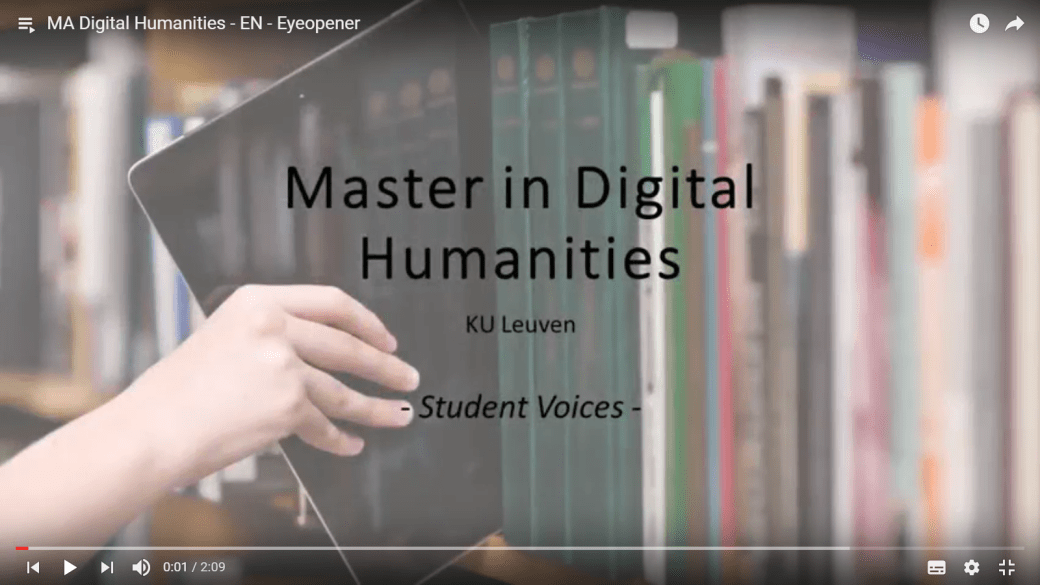
As Digital Humanities always implies a practical component of actually applying digital techniques, the Europeana Space MOOC hosted by KU Leuven offers amateurs and professionals alike the opportunity to try it out – you can have a look at our “tell your own photo storydscf5752 developed in collaboration with LIBIS, our natural partner in Digital Humanities! Offering these digital humanities experiences in higher education doesn’t stop with this MOOC however. Cultural Studies Leuven is also contributing to the KU Leuven MA in Digital Humanities programme, a Master-after-master degree targeting holders of a Master’s degree in the humanities, who want to take this next step in applying computational techniques by actually getting a serious in-depth training in programming. Cultural Studies contributes its Online Publishing course to this Master programme, which has, besides an introductory course in the field of Digital Humanities, a course on programming in Python (Scripting Languages) and a course on Information Structures and Implications. Now that this programme is in its second year and we already have successful graduates – some of whom are now pursuing Phd’s here and at universities abroad – we can say that it actually reaches its goal to offer students with a solid humanities background, such as the MA students of Cultural Studies, the necessary training and background to program their own solutions and applications. It allows for novel ways of doing humanities research, with an experimental touch. Have a look at what of some of the former students of the MA have to say!

MA DH 2.png

Benjamin Fondane or the Unfilmable Scenario

By Jan Baetens

fondane-2

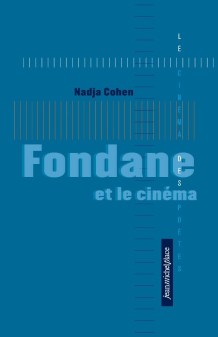
Nadja Cohen, Fondane et le cinéma – Paris, ed. Jean-Michel Place, 2016, 112 P., 10 euros

When new media appear, McLuhan argues, they tend to absorb old media, the latter surviving as “content” of the former. Yet if the medium is the message, as McLuhan’s still challenging slogan claims, this meaning does not only rest on its capacity to supersede an older medium. It has much more to do with the global transformation of the mediasphere that it both disrupts and reshapes and, more generally, with our interaction with the world, which is always medium-based.

Hence the importance of new media theory and practices that try to take into account this larger environment, instead of focusing on fetishlike gadgets or the mere pleasure of the novelty for novelty’s sake. One of the key aspects of the modern media environment is the acceleration of history and the subsequent impossibility to rely on stable media structures.

Nadja Cohen’s new contribution to the film and literature debate, after the superb Les Poètes modernes et le cinéma: 1910-1930 (Garnier, 2013), is part of this broader reflection on media change as seen through the lens of Benjamin Fondane (1898-1944). A post-Dada poet and artist, Fondane has elaborated around 1930 a very special kind of literary genre, somewhat uneventfully called “film-poem”, that pushes the new spirit of velocity and impossible stasis to its utmost limits. Fondane’s film-poems are not poems “on” film or “inspired” by cinema, nor are they examples of poetic cinema (whatever this term may signify). fondaneThey are instead screenplays, but screenplays that explicitly present themselves as unfilmable –less in the sense of parodies of screenwriting (this is what Boris Vian will do twenty years later in his fake scenario for the adaptation of I Will Spit on Your Graves) than as attempts to materialize the abstract idea of the ruin of all things solid in an era whose muse was destruction.

Nadja Cohen’s study offers a brilliant contextualization of the figure, the work and the thinking of Fondane, often discarded as a minor Surrealist. It also contains excellent close-readings of some of his film-poems, while astutely exploring Fondane’s lesser known visual collages that are the flip side of his writing production. But above all it, is a marvelously written book, which belongs to the shelves of all poetry and film lovers.

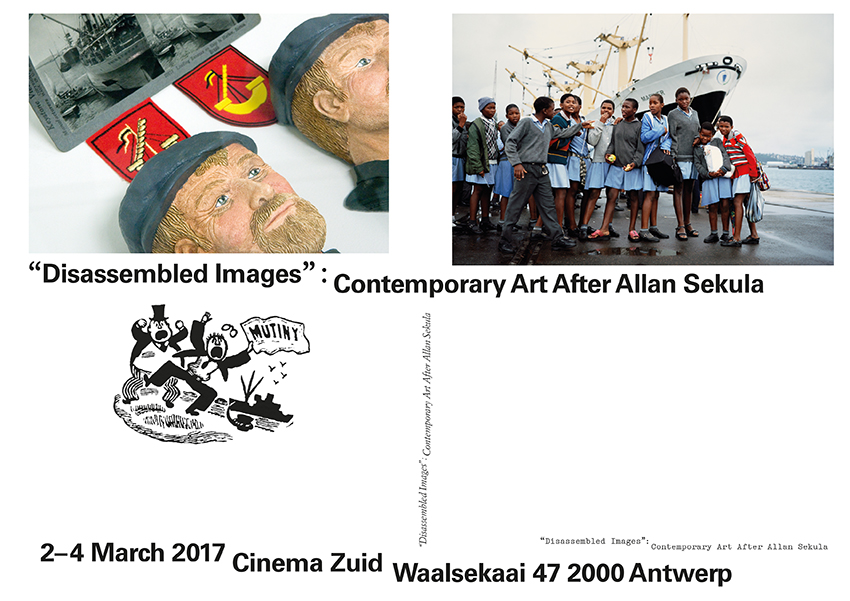
“Disassembled Images”: Contemporary Art After Allan Sekula

The Lieven Gevaert Research Centre for Photography, Art and Visual Culture (KU Leuven – Université catholique de Louvain) and M HKA – Museum van Hedendaagse Kunst Antwerpen kindly invite you to their scientific conference.

disassembled_images

This international conference takes the US artist, theoretician, critic, teacher and poet Allan Sekula’s Ship of Fools/ The Dockers’ Museum (2010-2013) as its point of departure. At the very end of his life Sekula produced this unfinished, multifaceted and variably installable work of art, which contains ca. 1250 objects. Focusing on dock workers and seafarers, Sekula’s Ship of Fools/ The Dockers’ Museum paid tribute to all the joined, past efforts of human labor now irretrievably lost in history – a struggle he identified as “Sisyphean.” In doing so, Sekula wished to provide a message of hope: his last work contributes to imagining possible forms of solidarity in a globalized economy confronted evermore with its own limitations. The conference’s participants will discuss both Sekula’s oeuvre and works by other contemporary artists whose approach dialogues with his seminal legacy.

The conference is organized around three thematic sections:

  • Collecting Folly
  • Maritime Failures and Imaginaries
  • Critical Realism in Dialogue

Each forms a separate session that opens up to contemporary art engaging with Sekula’s influential method of making artwork as “disassembled plays” – a term he connected to the work of Bertolt Brecht, and which served to indicate that he demands a substantial productive and temporal input from the spectators who are experiencing his works.

The keynote speakers of this conference will be W.J.T. Mitchell (University of Chicago) and Marco Poloni (artist, Berlin).

The conference will be held in English. Participation is free and open to all, but prior registration is mandatory. For more information, the conference schedule, and the registration form, please visit:

http://lievengevaertcentre.be/highlight/disassembled-images-contemporary-art-after-allan-sekula

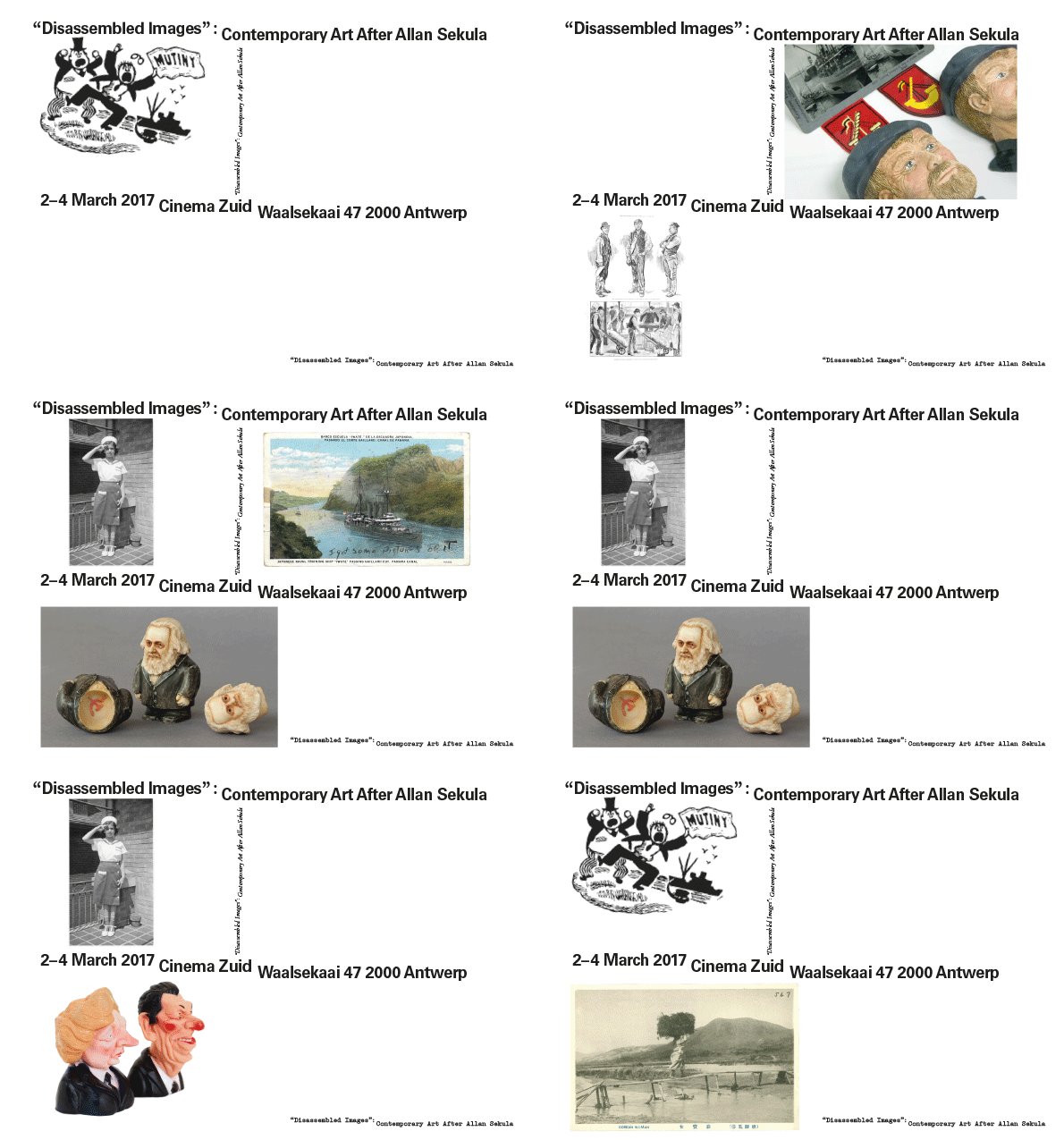
To download the leaflet, please click here.

disassembled_images

Flamenco, as it “really” is

By Jan Baetens

Flamenco culture, which includes cante (singing), toque (guitar playing), baile (dance), jaleo (vocalizations), palmas (handclapping) and pitos (finger snapping), but which is also inextricably linked with other fields of culture such as poetry and tauromachy (remember Hemingway’s Death in the Afternoon? Still the best possible introduction to this complex cultural network) – all of them having to do with the untranslatable notion of “duende” – is known by most of us as a form of “folklore”. It is therefore virtually highly suspect, given the problematic status of notions such as “authenticity”, the “popular”, “spontaneity”, the “people”, etc.

colita-1

It would be absurd however to deny that “real”, that is both profound and authentic art (but of course the concept of “art” is no longer appropriate here, since the very boundaries between life and art do no longer apply), no longer exists in a modern, mass-media saturated society in which the idea of community has become a caricature, and that it cannot resist and survive the commercial and ideological appropriations that can be made of it. The question is then: how to communicate the “experience” of such an art?  As already argued by John Dewey in his famous book Art as Experience (1932), an often forgotten forerunner of cultural studies, the only way of knowing such an art is byway of experience.

colita-2If you travel to Granada this Spring, don’t go to one of the flamenco shows that litters the touristic areas of the city. Forget about them, and go immediately to the Alhambra; more precisely, the photography exhibition curated by Concha Gόmez (professor at the Carlos III University in Madrid). This exhibition offers an amazing retrospective of the work of Colita – artist name of Isabel Steva (°1940) – one of the first professional female press photographers in Spain who has always been fascinated by the world of the gypsies and flamenco. Speculations on the misrepresentation of real and authentic culture immediately vanish when entering the exhibition, which is a model of great photography as well as curatorial intelligence. What makes the experience so strong is the complete coincidence of the various levels of mediation. One witnesses for example the intimate knowledge of the culture the artist wants to represent (the photographer is not an outsider of the flamenco culture). Furthermore, the curator has built a strong personal relationship with the photographer, as shown by a wonderful filmed interview in the exhibition which refrains from overloading the images with all kinds of didactic captions. There is a strong awareness of the historical and political complexities of flamenco, a longtime marginalized art, created by marginalized people. One cannot therefore simply document flamenco from the outside or by detaching it from the rest of a living culture where current ideas on art prevent us from seeing and feeling what is really happening. An additional level of mediation is the perfect capacity of disclosing the “duende”, the epiphany (?), with an economy of means that is shared by the flamenco artist, the photographer and the curator, and finally, the desire to not only focus on the exceptional value of masterpieces (although neither Colita nor Gόmez tend to hide the empowering presence of exceptional figures).

It is a good thing to be skeptical about “authenticity”, for it is the best way to experience it when it is really “there”.


COLITA FLAMENCO. El Viaje sin fin/Journey without End

Curator: Concha Gόmez

(Alhambra, Palace of Charles V, Jan. 26 to May 6, 2017, free admission)

European Congress of Qualitative Inquiry

February 7 – 10 2017 // Leuven, Belgium

After 12 successful editions of the International Congress of Qualitative Inquiry from our partner at Illinois University in the US, we are pleased to announce that the first European edition of the congress will be hosted in the beautiful city of Leuven, Belgium.

On behalf of the Network Qualitative Research Leuven and our distinguished partners, I extend a very warm welcome to qualitative researchers worldwide.

The venue of ECQI 2017 will be KU Leuven, situated near Brussels, the capital of Europe, and a centre of learning for almost six centuries now (founded in 1425). KU Leuven has grown substantially and has become a multi-campus university employing over 11,500 persons and hosting more than 50,000 students, 14% of which are ‘international’ students representing 147 different nationalities.

The 1st edition of the European Congress of Qualitative Inquiry is a unique event for sharing knowledge and seeking new collaboration and partnerships. It provides opportunities for addressing the common challenges that qualitative researchers face in their own geographical regions or research disciplines. Most importantly the Congress is a lively event, providing ample opportunities for interacting with friends and colleagues and learning about the latest developments and innovations in qualitative inquiry. Following the example of ICQI, we offer you a space where you may feel comfortable experimenting with new ideas and critical thoughts and push the boundaries of what we currently perceive as best practice in qualitative research.

Committed to strengthen the qualitative research agenda in Europe, we particularly invite contributions that address the important aspect of quality and reflexivity in qualitative inquiry.  Quality criteria and quality frameworks used to judge our own work and the work of others are constantly negotiated in the context of emerging areas of qualitative methodological innovation and new ways of conceptualizing qualitative inquiry. We recognize the value of flexible, emerging and progressive approaches to qualitative research developed in response to the often wicked, challenging topics we study and welcome contributions that are provocative, creative and critical towards our own established toolbox of qualitative research approaches.  To maximize learning potential, we invite researchers to share transparent audit trails of methodological decisions made in qualitative research projects and reconstruct their research logic for others. We hope to welcome many of you to join us in evolving debates on what constitutes good practice in qualitative inquiry and by doing so, influence the direction, focus and atmosphere of potential future editions of ECQI.

We are looking forward to welcome you in Leuven, a bustling city with many museums, monuments and historic buildings(incl. Unesco World Heritage) and a rich gastronomy, claiming to be ‘The place to beer!’.

On behalf of the Network Qualitative Research Leuven,
Karin Hannes, conference chair

More info: https://kuleuvencongres.be/ECQI2017

More videos: https://www.youtube.com/watch?v=Mdr08GP2w7A&list=PLNormAuTYSJumInVborMzkwg5zXdCvDg8&index=1


Keynote Speakers
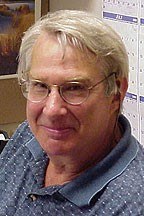
norman-k-denzinVirtual introduction to the European Congress of Qualitative Inquiry by Norman Denzin, conference chair of the International Congress of Qualitative Inquiry.

Norman K. Denzin is Emeritus Professor of Communications, Sociology, and Humanities at the University of Illinois, Urbana-Champaign. Denzin is the author or editor of more than two dozen books, including Indians  on Display; Custer on Canvas; The Qualitative Manifesto; Qualitative Inquiry Under Fire; Searching for Yellowstone; Reading Race; Interpretive Ethnography; The Cinematic Society; The Voyeur’s Gaze; and The Alcoholic Self. He is past editor of The Sociological Quarterly, co-editor (with Yvonna S. Lincoln) of four editions of the Handbook of Qualitative Research, coeditor (with Michael D. Giardina) of 12 plenary volumes from the annual International Congress of Qualitative Inquiry, co-editor (with Lincoln) of the methods journal Qualitative Inquiry, founding editor of Cultural Studies/Critical Methodologies and International Review of Qualitative Research, and editor of three book series.
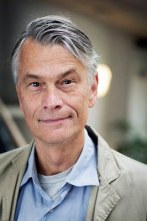
mats-alvessonMats Alvesson is Professor of Business Administration at the University of Lund, Sweden, and, part-time, University of Queensland Business School, Australia and Cass Business School, London. He has done extensive research and published widely in the areas of qualitative and reflexive methodology, critical theory, organized culture, knowledge work, identity in organizations, gender, organizational change, management consultancy etc. He has published 20 books with leading publishers and hundreds of articles, many of which are widely cited and used on higher levels in university education. Recent books include Understanding Gender and Organizations (Sage, 2009, with Y. Billing), Reflexive Methodology (Sage, 2009, with K. Sköldberg), Interpreting Interviews (Sage, 2010), The Triumph of Emptiness: Consumption, higher education and work organization (Oxford University Press, 2013) and Constructing Research Questions: Doing interesting research (Sage 2013, with J. Sandberg)

About his talk: Identifying and solving mysteries in empirical research. A methodology for generating novel and interesting theories is by challenging the links between empirical material and theoretical conclusions. Many researchers approach robust quantitative or qualitative data (generated through grounded theory, experiments, ethnographies, observations and so forth) as both the basis delivering theoretical insights through proper analysis and as the final arbiter of their theories’ truthfulness. I, by contrast, do not regard empirical material as the royal road to theory, no matter how diligently and rigorously it has been collected and how technically well it has been analysed. Instead, I see theory and empirical material in a constant interplay with the latter as a source of inspiration rather than as the ultimate arbiter for the latter. Theory and empirical material must be in constant dialogue, interrogating and refining each other, with special attention being paid to discontinuities, paradoxes and mysteries. I consequently suggest a methodology for theory development through encounters between theoretical assumptions and empirical impressions that highlight breakdowns. It is the unanticipated and the unexpected – the anomalies that puzzle the researcher – that are of particular interest in the encounter. These do not just appear, they need to be creatively created. Accordingly, theory development is stimulated and facilitated through a special interest in what does not work in an existing theory or in received wisdom. The ideal of this research methodology can be summed up as including two elements, the identification of a mystery and its solution. It means the active use of empirical material not to confirm and reproduce but kick back and challenge dominant ideas and developing something unexpected and novel. The talk is based on Alvesson and Kärreman: Qualitative Research and Theory Development, Mystery as Method, Sage 2011).

This key note is sponsored by the Faculty of Economics, KU Leuven.
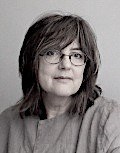
maggie-maclureMaggie MacLure is Professor of Education in the Education and Social Research Institute (ESRI) at Manchester Metropolitan University (MMU). She leads the Theory and Methodology Research Group in ESRI. Her most recent research projects have centred on early childhood education, and the issue of ‘behaviour’ in school. Maggie is the founder and director of the Summer Institute in Qualitative Research. Her book, Discourse in Educational and Social Research, won the Critics’ Choice Award from the American Educational Studies Association.

About her talk: Rethinking reflexivity in the ‘ontological turn’. Reflexivity has been a powerful concept for qualitative research. It has challenged narrow definitions of ‘objectivity’, and attempted to repair the fatal breach that such definitions posit between researchers, participants and knowledge. However I want to reconsider the status of reflexivity, from within the ontological or materialist ‘turn’ in theory. This ‘turn’ – a loose confederation of disparate influences from Barad, Braidotti and Deleuze, among many others – is prompting a radical rethinking of the methods and the conceptual architecture of qualitative inquiry. It presents a profound challenge to the humanism that still underpins much of the research endeavour, with its privilege of language, discourse and culture over matter and nature. Can reflexivity be rethought within the new materialisms; or is it irrevocably tainted through its association with human entitlement, and the distancing effects of language and representation? Barad asserts that ‘we’ are components of each research apparatus that engages the world: that we are born from the ‘agential cut’ that also produces the ‘data’ and our relation to it. What would an immanent reflexivity look like, and how would it work? I suggest that we might think of reflexivity, after Laura Cull (2011), as a kind of immanent attention or ‘ontological participation’, and explore some of the methodological and ethical implications for qualitative inquiry.

Interview with Dr. Bridget Conor

By Ilham Essalih

Dr. Bridget Conor is Senior Lecturer at King’s College London, in the Culture, Media and Creative Industries Department. She was recently at KU Leuven, and we were very happy to be able to interview her on this occasion.

conor3

I would like to thank you for being with us at KU Leuven today. I hope you are enjoying Belgium so far. I’d like to also thank you for accepting to do this interview. Before I get into more specific questions, could you tell us which issues you are working on at the moment?
You’re welcome, Belgium is wonderful!
In my department of Culture, Media and Creative Industries, there are a few of us who have been working on these issues around what we call Cultural Labour, or experiences of work in the cultural industries. My interest is mainly in working lives in film and television productions and screenwriting specifically. I’m also interested in why people choose to work in these professions, how they get into the industry, what their experiences are once they get in, and I guess, what we call precarious work, precarious lives. I’m also interested in what kinds of rewards people get from working in these industries, beyond simply money or fame. The other issue that I have become interested in is inequalities in the cultural industries, because to my mind, and some of my colleagues would agree, these industries should be egalitarian, and should be open to all, and that’s what creativity is, creativity is free, abundant and we all have it; but the industries are, if we look at them, often so unequal in terms of every type of inequality we might find. So I’m interested in these kinds of discrepancy between the dreams of what a creative life could be and what the reality is in terms of who actually gets to do that work.

In the introduction of Gender and Creative Labour you develop the problem of gender inequality in the Cultural and Creative Industries, and you also mention discrimination on grounds of race, disability, place etc. You mention that Black, Asian and Minority Ethnic communities are under-represented in these industries, and that this problem is only getting worse. What about individuals who are at the intersection of these identities? By this I mean, for instance, women of colour or disabled women? Have you yourself worked on this subject? Do you think this is a relevant issue?
The short answer is: yes. I think intersectionality is really crucial if we talk about these issues. Because in a way, if we talk about inequality, intersectionality is still something relatively new in the field of Cultural Labour. I think we have to be really cautious about separating out one kind of inequality. Of course I think we need to, for practical reasons, but I think what’s difficult is; how do we develop methods that take into account intersectionality, because intersectionality of course is complex. For particular persons who try to get into these industries, you know there’s a huge complexity of identity that they bring onto the table, but I think the evidence we do have, although it is quite limited, that if you are a woman, and then you are also a woman of colour or you are also living with disability, it can be even more difficult for you to not only get into the industry, but then maintain and build a sustainable career. I think that’s really tricky, because those who might be making policy to change these things have to understand what intersectionality is as well. It’s something I have certainly thought about and my other colleagues have also done a lot of research that takes this into account, I think I just hope that more people will be interested in these issues and will do more of those intersectional studies.

When we discuss the problem of work discrimination against women, you often get the reaction that it is normal for companies not to hire women because of the risk of pregnancy and having to pay maternity leave, and that this is not misogyny, but rather the pragmatic need of a company to make profit and that, although regrettable, this is the rational reality. What do you respond to that as a woman, specifically in the context of the film industry?
Well, I think you’re absolutely right. If we as researchers talk to those who make policies and we kind of say, look, there are these problems and the statistics clearly show us that we’re nowhere near fifty-fifty equality when it comes to gender when it comes to directing film, or making art, and I think often the first response to that, is, exactly as you say, that it’s just “natural”, because yes, women, often at some point in their careers and their natural life cycle want children and we as companies and organisations have to be pragmatic and we have to take that into account and what becomes difficult, is that that’s absolutely true and fair on one level, but I think the problem is, women and motherhood very quickly become conflated. Women are often seen by a production company as potentially problematic because of the fact that they may one day possibly have children. So I think that this potentiality always becomes a certainty. The other thing that I find curious about this, is that it’s always women who are associated with childbirth and childrearing, whereas we could talk about it in terms of parenting, I mean men are also parents, and men who work in the cultural industry often have children but that’s never seen to be a problem for them, and of course, women have the biological capacity to bear children so we have to take that into account, but I still think that very quickly, this becomes a kind of natural reasoning and a natural problem. It is just often used as the one and only nice argument of why we don’t need to change this, and maybe change things could just be to have better childcare in organisations or in corporations, but again, we don’t really see that happening, at least not at the moment.

Do you think womanhood and motherhood should be two completely separate things?
It’s tricky, but potentially, yes, I think we need to try not to see these things as always inextricably linked, because otherwise we very quickly find ourselves in a kind of biological determinism. Maybe we need to try to overturn some of those assumptions. At least it would be fun to try.

You also mention gender segregation in the film industry, where you typically find women working in the hair, make-up and fashion departments, and men are predominantly present in sound and light engineering. Why do you think this segregation exists? Is it because men and women automatically put barriers to themselves? Do you think there is actual discrimination in accessing these jobs? Or is this simply a matter of comfort zone?
Oh, boy! Could it be all of the above?! I think it’s a very tricky combination of all of those things, I think, yes, the evidence shows that there is both horizontal and vertical segregation. I guess when I think about these issues, it’s very important to look at the history of these industries. When I looked back at the really early time when screenwriting as a profession kind of appeared in the early twentieth century, you actually initially had lots of women writing for film, as many as men. It was pretty close to fifty-fifty equality. But as these industries became more and more financialised, and therefore more business-orientated, they very quickly got new kinds of advertising and the kind of hype around new industries and they suddenly became really quite gendered in terminology and image, you quickly began to see that all the ads for camera’s and camera equipment were about the strength and power of those tools and technologies, which then were just assumed to be masculine traits, and women very quickly became associated with other kinds of jobs that are sex-typed ‘feminine’. So from very early on you get professionalisation and you get these stereotypes and myths of the profession, and then you start seeing women fall out of the industry and fall into those types of jobs that are considered feminine. History can be a helpful way to show us that it is not necessarily natural. Maybe we are brought up in certain ways, and then we assume that make-up and costume are things women are necessarily interested and good in. I suppose there’s individual and subjective dimensions of this, but I suppose we really need to think about those in the context of the history of these jobs and I guess when we start to shake things up, when we start seeing women directing films, then we really start seeing a change and we see that this gender segregation is not just common sense, it can be changed. We just need to try.

Do you think that a certain academic elite has the right to tell women that they shouldn’t restrict themselves to certain jobs and that they should aspire to ‘more’ when maybe they just feel comfortable doing what they do? Are certain women entitled to think that they know better than others because they are more educated?
It is just really, really hard, and you’re right, there is this image that academics and researchers are locked away in their ivory tower and they are disconnected from real people’s lives, and I can really see why. But the reaction that “you don’t know me, or my life or my choices”, is legitimate, who are we to pronounce that? I’m still learning myself and I think that in an ideal world I would like to do the kind of research that is qualitative and really takes into account people’s lived experience. Academics shouldn’t just theorise ‘over there’ and there’s probably more work to do in figuring out how we can try to do more collaborative research that works with people in communities and that address issues that are important to them. We can only try and aspire to this.

Thank you so much for this interview!
You’re welcome, thank you.

STUDY DAY: SCREENWRITING, RESEARCH AND STEREOTYPES

Bozar – 09.12.2015 | 14:00 – 19:00 http://www.bozar.be/en/activities/121469-study-day-screenwriting-research-and-stereotypes

(Anglais – Engels – English)

FR En tant que média de masse, la télévision a un rayonnement très large. Bon nombre de séries télévisées de qualité et à succès font référence à l’histoire ou à des débats contemporains, et se basent sur des recherches approfondies pour créer des histoires convaincantes et des univers narratifs captivants et réalistes. À l’occasion de cette journée, nous souhaitons examiner le genre de recherches entreprises par les scénaristes pour créer des univers crédibles pour les séries. Nous désirons également questionner la recherche académique sur la télévision contemporaine. Dans quelle mesure la télévision renforce-t-elle ou conteste-t-elle les stéréotypes dominants (groupe ethnique, genre, sexualité) ? Les séries aspirent-elles à répondre aux problèmes sociopolitiques contemporains et à les influencer ? La culture télévisée contemporaine est-elle diversifiée, tant sur le plan de la production que de la représentation ? Quelles stratégies s’avèrent efficaces pour stimuler la diversité de manière crédible, tout en attirant de vastes publics ? Comment des récits locaux peuvent-ils toucher un public mondial ?

NL Als massamedium heeft de televisie een groot bereik en een grote aantrekkingskracht. Veel succesvolle televisieseries behandelen de geschiedenis en hedendaagse debatten, en steunen op heel wat researchwerk om goede verhalen met pakkende, realistische achtergronden te brengen. In dit gesprek belichten we welk soort research van scenaristen leidt tot boeiende werelden voor series en plaatsen we die research tegenover academisch onderzoek naar hedendaagse televisie. In welke mate bevestigt of weerlegt de televisie de gangbare stereotypes (ras, gender, seksualiteit)? Koesteren series de ambitie om hedendaagse politieke en sociale problemen aan te snijden en te beïnvloeden? Hoe divers is de hedendaagse televisiecultuur, zowel wat betreft de productie als de representatie? Wat zijn efficiënte strategieën om op een geloofwaardige manier diversiteit te stimuleren en toch een breed publiek aan te spreken? Hoe kunnen lokale verhalen en achtergronden een veel breder publiek aanspreken?

EN As a mass medium, television has a great reach and appeal. Many successful quality television series refer to history and contemporary debates, and use a lot of research work to create good stories and compelling, realistic story worlds. In this panel, we want to examine the kind of research that is done by screenwriter sin order to create strong series universes and enter into dialogue with academic research on contemporary television. To what extent does television both confirm and challenge prevailing stereotypes (race, gender, sexuality)? Do series aspire to address and also influence contemporary political and social problems? How diverse is contemporary television culture today, both on the level of production and on the level of representation? What are effective strategies to stimulate diversity in a credible way and still appeal to broad audiences?  How can local stories and histories affect global audiences?

14:00 > 15:00 Frederik Dhaenens (BE) How (not) to represent sexual diversity: From queer over normal to normative

FR Depuis le 21ème siècle, les personnages lesbiens, gays, bisexuels ou transgenres (LGBT) ne sont plus absents ou représentés comme des stéréotypes monodimensionnels dans les séries télévisées. Pourtant, les représentations actuelles sont toujours élaborées pour correspondre au discours occidental normatif dominant sur le genre et la sexualité. Dans cette conférence, je montrerai les différentes manières de représenter des personnages LGBT et expliquerai pourquoi certaines d’entre elles peuvent être considérées comme stéréotypées ou offensantes alors que d’autres sont transgressives et dans l’esprit queer.

NL Sinds de eeuwwisseling zijn LHBT personages in televisie series niet langer afwezig of gerepresenteerd als eendimensionaal, betreurenswaardig of stereotiep. Toch zijn vele van deze representaties gevormd om te passen binnen het dominante, normatief discours rond gender en seksualiteit in de Westerse beschaving. In deze lezing zal ik de verschillende wijzen van voorstelling  bespreken en argumenteren waarom bepaalde representaties stereotiep en aanstootgevend zijn en andere transgressief en zonderling.

EN Since the turn of the twenty-first century LGBT characters are no longer absent or represented as one-dimensional, deplorable or stereotypical in television series. Yet, many of these representations are shaped to fit the dominant and normative discourses on gender and sexuality in Western societies. In this lecture, I will demonstrate the diverse ways used to depict LGBTs and argue why some representations can be considered stereotypical and offensive and others transgressive and queer.

 15:00 > 16:00 Bridget Conor (UK)  ‘It’s getting better’: Debating and researching inequalities in television production studies

FR Lors de cette discussion, Bridget Conor abordera quelques-uns des débats actuels dans la recherche académique, l’élaboration des politiques et la couverture médiatique, à propos des inégalités dans l’industrie culturelle. Elle se penchera en particulier sur la façon dont ces débats transparaissent dans les productions télévisées, en s’appuyant sur ses propres recherches en matière d’écriture scénaristique, de genre et de travail de création.

NL In dit gesprek zal Bridget Conor het hebben over de huidige debatten in het academisch onderzoek naar, de beleidsvorming rond en de mediabelangstelling voor ongelijkheden in de culturele industrieën. Ze zal vooral nader ingaan op de manier waarop deze debatten in televisieproducties worden gevoerd, steunend op haar eigen onderzoek naar scenarioschrijven, gender en creatief werk.

EN In this talk, Bridget will discuss some of the current debates in academic research, policymaking and media coverage which focus on the problem of inequalities in the cultural industries. She will particularly focus on how these debates play out in television production, drawing on her own research on screenwriting, gender and creative labour.

16:30 > 17:30 Keynote Nicola Lusuardi Make it Original. Aesthetical research and innovation in new serial storytelling

FR Depuis 1990, Nicola Lusuardi travaille comme auteur dramatique pour différentes sociétés de production ainsi que comme scénariste, script doctor et superiveur pour les chaines de télévision  RAI, Mediaset, Sky. Il est également consultant  et tuteur au TorinoFilmLab-Interchange  et au Biennale College

NL Nicola Lusuardi werkt sinds 1990 as voor verschillende productiehuizen als story editor en voor televisie netwerken als RAI, Mediaset, Sky. Hij werkt ook als consultant en leraar in TorinoFilmLab-Interchange  en Biennale College.

EN Since 1990, Nicola Lusuardi has been working as a playwright for several production companies and as a screenwriter, story editor and supervisor for television networks RAI, Mediaset, Sky. He also works as a script consultant and tutor in TorinoFilmLab-Interchange and Biennale College.

17:30 > 19:00 Round table Researching Arena Through Characters

With Chris Brancato (Narcos, USA), Nicolas Peufaillit (Les revenants, FR), Helen Perquy (Quiz me Quick, BE) and Nicola Lusuardi (1992, IT), Bridget Conor (UK)


Between Neo and Retro: a conference on nostalgia and reinvention

By Jan Baetens

Today, objects are no longer made to last: their vital (sic) mode of existence is that of obsolescence, for throwing away and replacing all that exists is what makes the world and the economy make go round. At the same time, vintage, nostalgia, recycling are everywhere, and no less present than amnesia, even within digital culture (which would be nothing without skeuomorphs, i.e. derivative objects that retain ornamental design cues from structures that were necessary in the original).

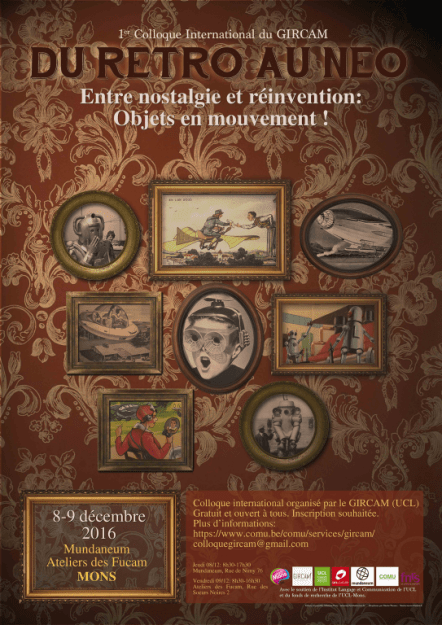
affiche_colloque-smallOn 8 and 9 December, the UCL based research group GIRCAM (a French acronym that refers to the study of cultures “on the move”) organizes a conference on this key issue. The venue is Mons (and as all readers of this blog already know, any opportunity is good to visit this wonderful city), and the diversity of the program is exciting.

All details can be found here and admission is free. Don’t miss the opportunity to hear about the hidden connections between hockey (collectors) cards and houseboats, aquariums and zeppelins, audio- and videocassettes and mooks (and why not also moocs, today’s hype, tomorrow’s nostalgia item).

Back to the future! Be there!